With the increasing consciousness towards the environment, sustainability has become a global priority now, ..
September 15, 2026
Most people spend more time picking out a faucet finish than they do actually researching the sink itself and then wonder six months later why it dents easily, sounds like a drum every time a plate goes in, or doesn’t fit the cabinet the way they pictured. A sink is one of the few kitchen fixtures you’ll touch every single day for years, and a rushed decision here tends to show up fast.
If you’re in the middle of a renovation or new build, here are the mistakes that trip people up most often and how to sidestep them before the sink is already installed.
A sink can look flawless in a showroom photo and still be the wrong choice for how you actually cook and clean. Glossy, mirror-polished finishes photograph beautifully but show water spots and scratches far faster than a brushed or matte finish. It’s worth handling a sample in person, running your hand across the surface, and picturing it after a week of actual use — not just its first day.
This ties directly into looks-first shopping. Buyers often don’t ask about steel thickness (gauge) at all, assuming any stainless steel sink is basically the same. A lower gauge number means thicker, more dent-resistant steel — and skipping this question is how people end up with a sink that dings the first time a heavy pot lands in it.
Nobody thinks about sink noise until they’re standing in their new kitchen and every dropped spoon sounds like a cymbal crash. Thinner, uninsulated sinks amplify sound against bare metal. Sound-dampening pads or a coated underside make a real difference here, and it’s a detail that rarely comes up unless you specifically ask about it before buying.
It sounds obvious, but it’s one of the most common mistakes: falling in love with a sink online before confirming it actually fits the base cabinet. Farmhouse and apron-front sinks especially require specific cabinet modifications, and retrofitting after the fact gets expensive fast.
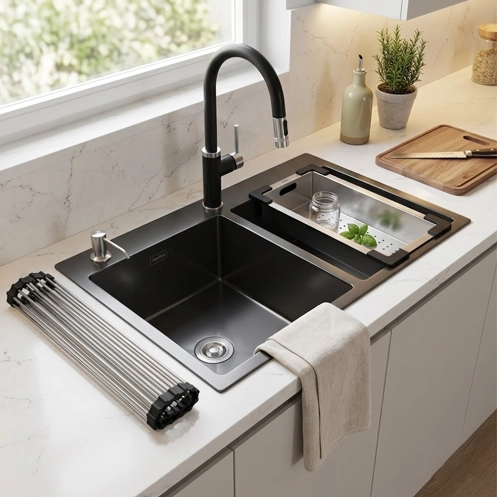
Double-bowl sinks are great for separating wash and rinse, but they shrink the usable space for large pots and baking trays. Single-bowl sinks handle oversized cookware better but offer less flexibility for multitasking. This is a genuine tradeoff, not a “better vs worse” choice — and buyers often pick based on habit rather than actually thinking about how they cook.
Every material has upkeep, and skipping this research is how people end up frustrated with an otherwise great-looking sink. Composite sinks can require specific cleaners to avoid dulling the finish. Stainless steel is low-maintenance but can show water spots if not wiped down regularly. Knowing what you’re signing up for before you buy prevents a lot of buyer’s remorse.
Undermount sinks need solid countertop support and precise cutout work; drop-in sinks are more forgiving but show a visible rim. Some sink and countertop combinations simply don’t pair well — for instance, heavier composite or fireclay sinks may need reinforced cabinetry. Confirm installation compatibility with your countertop material and installer before you commit, not after the sink arrives.
The cheapest sink on the shelf is rarely the cheapest option once you factor in how soon it needs replacing. Thin-gauge steel or low-grade composite sinks tend to show wear, dent, or stain within a few years, while a well-made sink — even at a higher upfront cost — often outlasts the kitchen renovation itself. It’s worth asking what you’re actually paying for, not just comparing sticker prices.
Most kitchen sink regrets trace back to skipping one of these checks — not to picking the “wrong” material or style outright. Slow down, ask about gauge and sound insulation, measure your cabinet, and think honestly about how you cook before you buy. A sink chosen this way tends to hold up for years without a second thought, which is really the whole point.
Generally, 18-gauge steel offers strong dent resistance for daily use.
Is an undermount or drop-in sink easier to maintain?
Undermount sinks are easier to wipe crumbs directly into, since there’s no rim to catch debris, but they require more precise countertop installation. Drop-in sinks are simpler to install but the visible rim needs regular cleaning.
Measure your cabinet’s interior width and depth, then compare it against the sink’s exact dimensions — not just the “fits standard cabinet” label some listings use, since standard sizing can vary between manufacturers.
At Jayna Sinks, we’d rather walk you through gauge, configuration, and installation details upfront than have you discover a mismatch after the sink is already in your kitchen. If you’re weighing your options and want a second opinion before you buy, reach out — we’re glad to help you avoid these mistakes altogether.
With the increasing consciousness towards the environment, sustainability has become a global priority now, ..
September 15, 2026
The kitchen being the primary space and the most used space in the home requires to be cleaned and maintaine..
September 15, 2026
The kitchen serves as the powerhouse in any Indian household; it is the most utilized area in any household...
September 15, 2026


