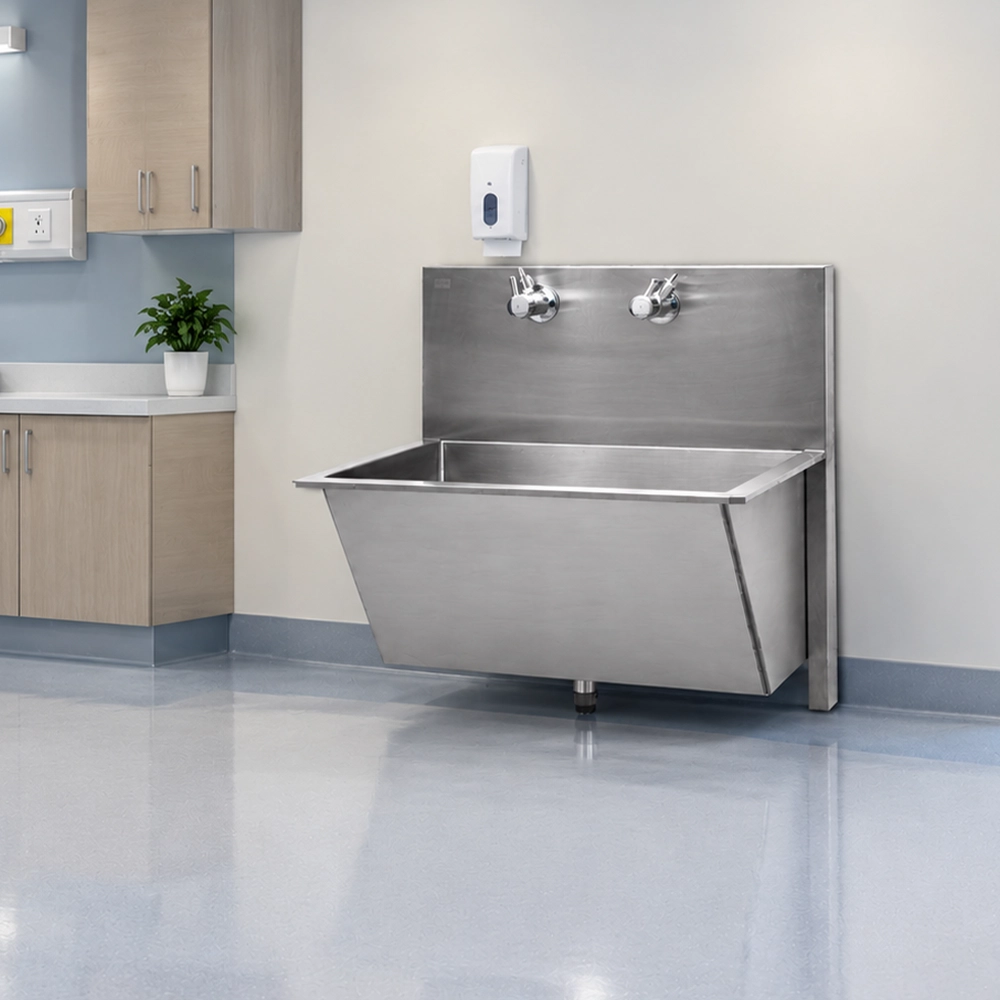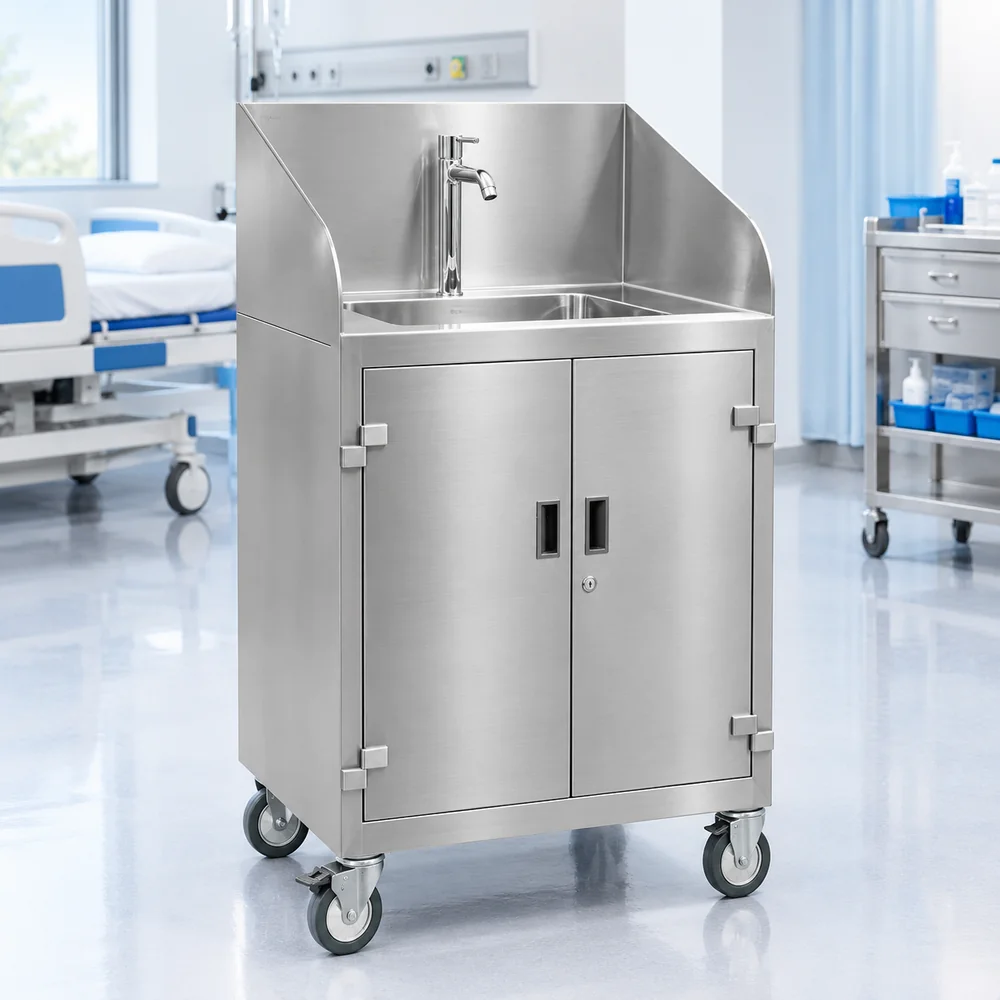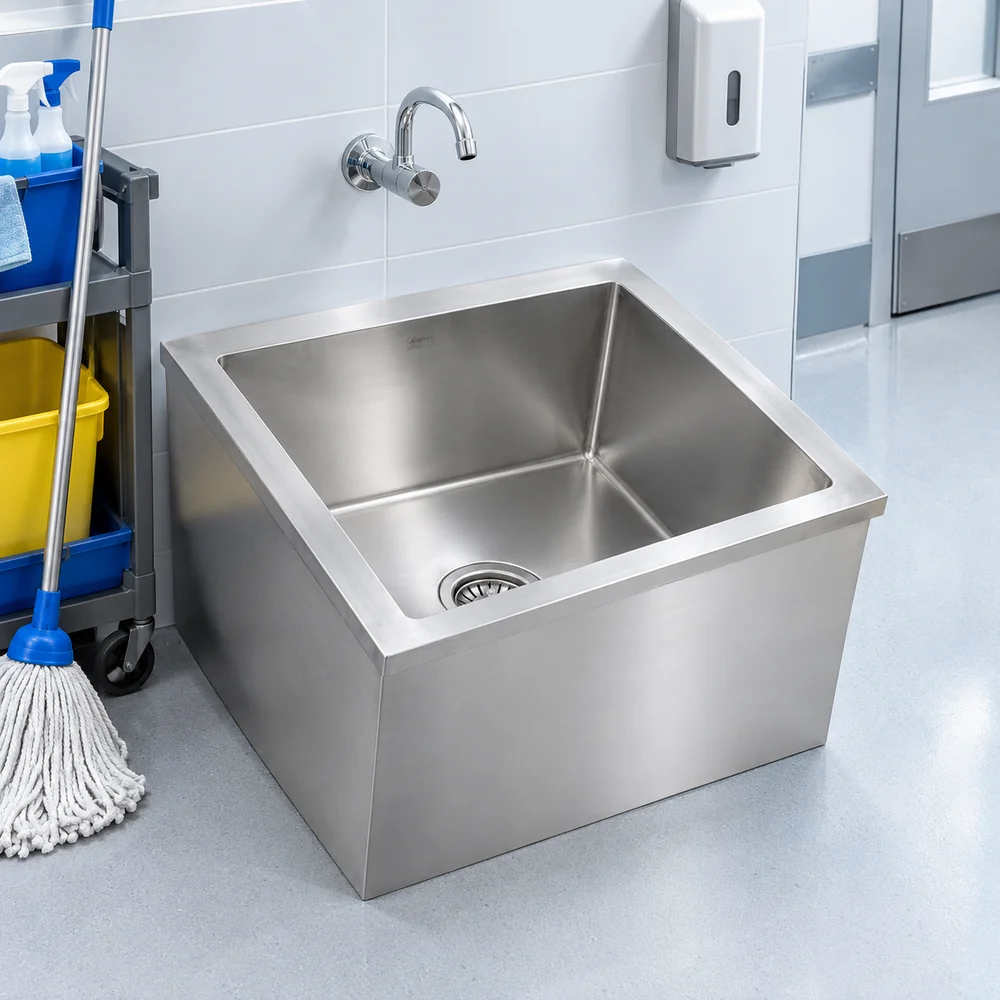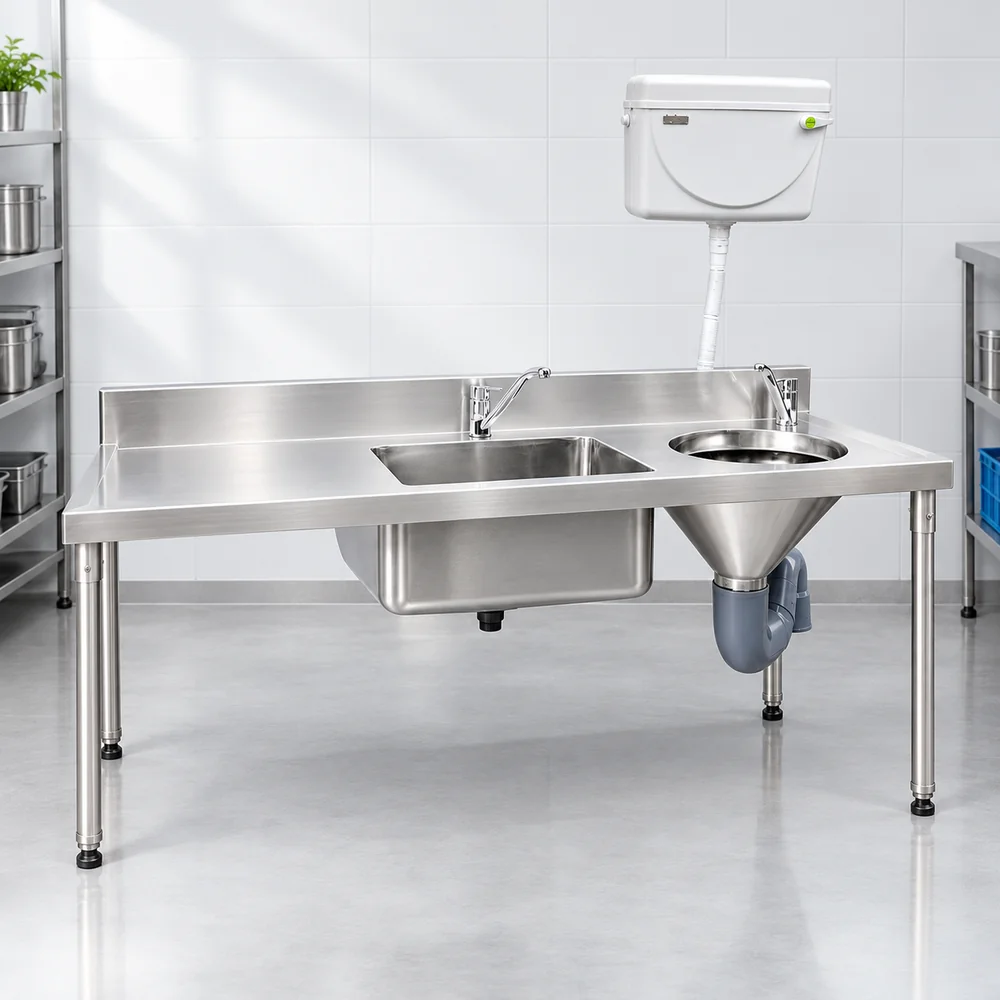
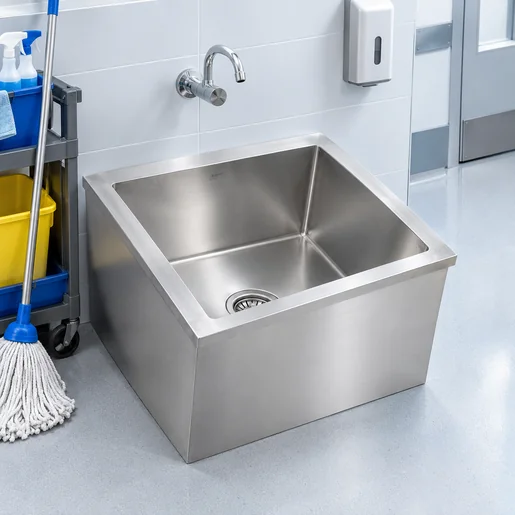
When there’s no proper place to empty a mop bucket, dirty water ends up in hand-wash basins or toilets. In a hospital, that’s exactly what shouldn’t happen. A mop sink gives housekeeping staff a dedicated, deep basin in the dirty utility room for filling buckets, rinsing mops and pouring away used water. It sits at a practical height, so heavy buckets are easier to lift and tip. It’s made in stainless steel that stands up to disinfectants and daily rough use.
Explore Jayna’s comprehensive catalogues offering premium stainless steel products modern kitchen accessories, high-quality bathroom drainage, and designer PVD sanitary ware. Find affordable solutions for both kitchens and bathrooms, crafted with precision and advanced technology.


It’s a sink in the dirty utility room that’s used only for cleaning tasks, such as filling and emptying mop buckets and rinsing mops and cloths. It’s kept separate from hand-wash and clinical sinks.
Used mop water carries dirt and contamination from floors. Pouring it into a basin used for hand washing risks contaminating that basin, so hospitals keep the two separate.
A mop sink is mounted at a raised height so buckets can be lifted and tipped into it. A janitor sink sits on the floor, so heavy buckets can be set down and emptied without lifting. [VERIFY that this matches Jayna’s designs.]
In the dirty utility room or housekeeping store on each floor or department, so staff don’t have to carry dirty water long distances.
Every hospital floor gets mopped several times a day, and the dirty water from that work needs somewhere proper to go. Jayna’s stainless steel mop sink gives cleaning staff a dedicated basin for filling, rinsing and emptying buckets. It keeps cleaning work out of hand-wash sinks and makes a routine ...