A quartz kitchen sink is among the most common materials used in today's modern kitchen owing to its eleganc..
September 15, 2026
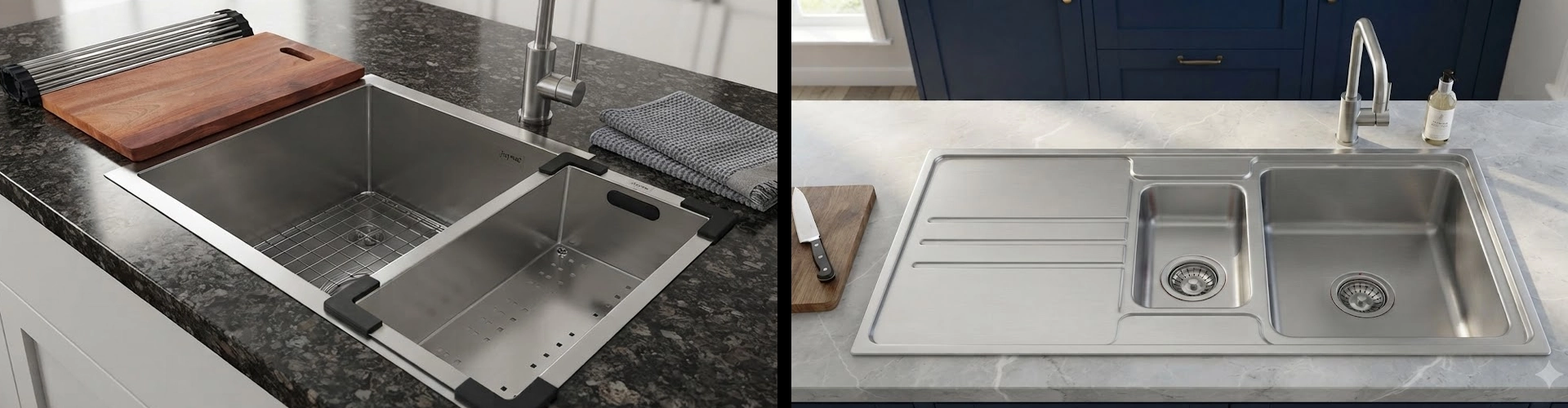
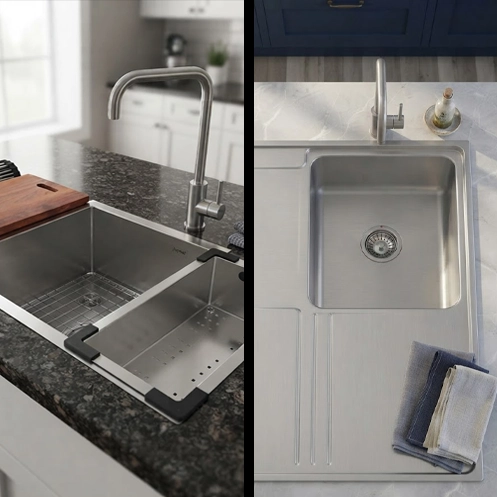
If you’ve spent any time looking for a stainless steel sink you’ve probably seen two different words used to describe how they’re made: handmade and pressed. These aren’t fancy words. They tell you two very different ways a sink is created and that way of making affects everything from how much it costs to how well it works in your kitchen for many years.
Lets look at what makes the two different so you can choose the one that works best for your kitchen and what you want.
How Each Sink Is Actually Made
The Handmade Process
A handmade sink begins as a piece of stainless steel and is shaped mostly by people who are really good at their job. They use tools that they hold in their hands, hammers and special ways of joining metal that they have learned over years. Every curve, line and corner is made by hand then made smooth and shiny by hand until the surface looks perfect with no lines.
Since theres no mold that tells them what to do the people who make the sink can be more creative. Sinks can be made in sizes, unusual shapes or bigger single-bowl designs that would be hard or not possible to make with a machine.
The Pressed Process
A pressed sink is made using a machine called a hydraulic press and a special shape called a die. A flat piece of steel is put into the machine. Pushed into shape all at once making the bowl the edges and the area around the drain, in one single process.
This method is fast, consistent, and highly repeatable — which is exactly why it’s the standard for mass-produced sinks. Every unit that comes off the same die looks virtually identical.
Handmade sinks are typically welded rather than pressed at the corners, and skilled fabrication often results in thicker, more reinforced seams. This tends to translate into strong resistance against dents and long-term structural fatigue, especially in heavy-use kitchens.
Pressed sinks, formed from a single continuous sheet, have no seams at all — which actually gives them a natural advantage against leaks, since there’s nothing to weld or potentially fail over time. The tradeoff is that the corners, formed under pressure, are sometimes thinner than the rest of the basin.
This is where handmade sinks pull ahead. Because there’s no die limiting the shape, custom depths, widths, and bowl configurations are all on the table. If you have an unusual cabinet cutout or want a statement farmhouse-style basin, handmade construction gives you room to design around your kitchen rather than the other way around.
Pressed sinks are limited to whatever dies the manufacturer already owns. You get consistency and proven designs, but not much room for customization.
A well-made handmade sink often has a slightly more refined, almost sculpted look, since polishing is done by hand and seams are smoothed individually. Pressed sinks have a very uniform, clean-lined finish — precise, symmetrical, and consistent every time, which appeals to buyers who want a predictable, machine-perfect look.
Handmade sinks generally cost more, and it’s not hard to see why — they require significantly more skilled labor and time to produce. Pressed sinks benefit from automation and scale, which keeps the price more accessible.
One practical detail buyers often overlook: handmade sinks can be built with tighter, more squared-off corners, maximizing usable basin space. Pressed sinks usually have slightly rounded corners due to the limitations of the stamping die, which can mean a bit less room for large pots and baking trays.
Go handmade if you want a custom size or shape, value reinforced durability in a high-traffic kitchen, or simply want a sink built with visible craftsmanship behind it.
Go pressed if you prefer a budget-friendly option, want a leak-resistant seamless basin, or are happy with standard sizing that fits common cabinet layouts.
Neither option is objectively “better” — they’re built for different priorities. It really comes down to whether you value customization and craftsmanship or consistency and value.
At Jayna Sinks, we manufacture both handmade and pressed stainless steel sinks, because we’ve seen firsthand that different kitchens call for different solutions. Whether you’re after a fully custom, hand-fabricated centerpiece or a reliable, seamless pressed sink for everyday use, our team can help you weigh the tradeoffs against your actual kitchen — not just a spec sheet.
Not sure which build style fits your space? Reach out to Jayna Sinks and we’ll help you find the right sink for the way you cook, clean, and live.

A quartz kitchen sink is among the most common materials used in today's modern kitchen owing to its eleganc..
September 15, 2026
Have you ever arrived home late at night, stripped off your clothes in the dark, and stepped into the kitche..
September 15, 2026
Cockroaches are a very common problem in Indian kitchens, particularly in regions where there is moisture an..
September 15, 2026


