Your kitchen sink is the one that doesn’t really come to your mind when you are planning the new concept and..
September 16, 2026
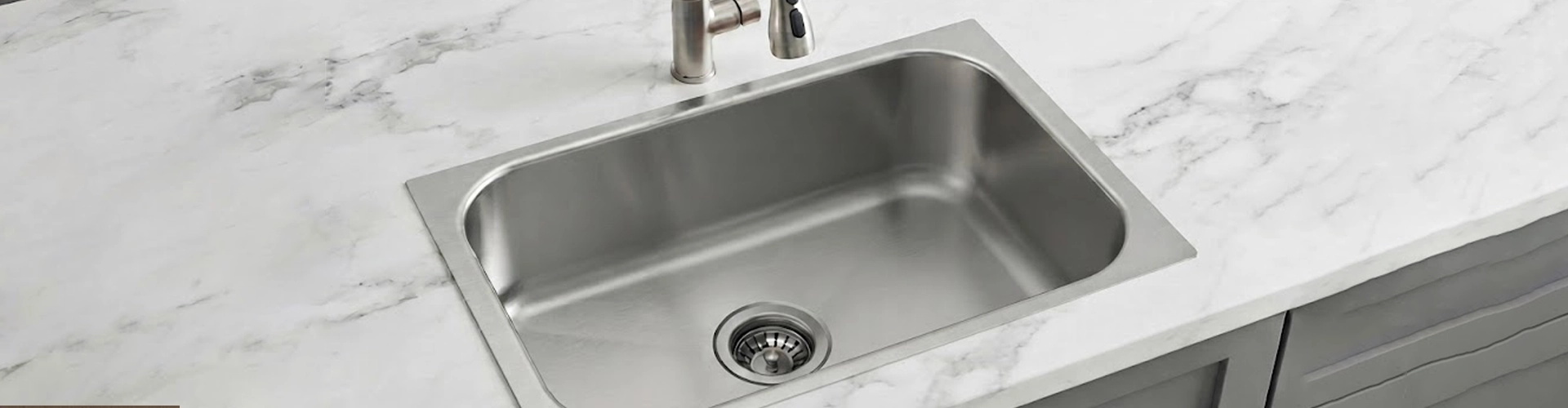
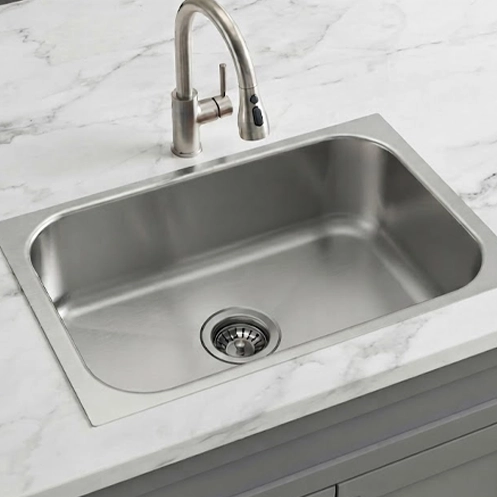
You wipe the sink down, walk away, and come back an hour later to find those same chalky white marks creeping back around the drain and faucet base. If that sounds familiar, you’re not doing anything wrong — you’re just dealing with hard water, and no amount of regular soap and a sponge is going to fully solve it. Hard water stains need a slightly different approach than everyday grime.
Here’s what’s actually causing those marks, and how to get rid of them for good.
Hard water carries a higher concentration of dissolved minerals, mainly calcium and magnesium. When that water evaporates off a surface instead of being wiped away, it leaves the minerals behind as a chalky, sometimes crusty residue. Over time, in the same spots — around the drain, under the faucet, along the basin’s waterline — that residue builds into the stubborn white film most people call limescale.
This isn’t the same as rust or a stain from food or grease, which is exactly why generic all-purpose cleaners often struggle to fully remove it. Mineral deposits respond best to mild acids, not soap.
Soak a paper towel or cloth in plain white vinegar and lay it directly over the stained areas. Let it sit for 15–20 minutes so the acid has time to break down the mineral deposits, then wipe along the grain of the steel with a soft sponge. Rinse thoroughly and dry with a towel.
These tighter spots are harder to cover with a cloth. Instead, soak a cotton ball or small piece of paper towel in vinegar and tuck it directly into the crevice, letting it sit for the same 15–20 minutes before scrubbing gently with an old toothbrush and rinsing well.
If vinegar alone doesn’t fully clear things up, mix baking soda with just enough water to form a thick paste, then spread it over the stained areas. Let it sit for about 10 minutes, scrub gently along the grain with a soft-bristle brush, and rinse thoroughly. The mild abrasiveness of baking soda, combined with vinegar’s acidity, handles most limescale that soap and water alone can’t touch.
For deposits that have really settled in, apply the vinegar soak first, wipe it away, then follow immediately with the baking soda paste. The two react and fizz slightly, which helps lift more stubborn residue than either one used alone.
This is the single most effective habit against hard water stains. Water that evaporates on its own leaves minerals behind; water that’s toweled off doesn’t get the chance to. A quick 15-second dry-off after washing dishes prevents most buildup before it starts.
If hard water is a persistent, whole-house issue rather than an occasional annoyance, a water softening system addresses the root cause rather than the symptom. This is a bigger investment, but for households dealing with heavy limescale on faucets, sinks, and even glassware, it’s often worth it long-term.
A small squeegee kept near the sink, run across the basin after the last use of the day, takes seconds and dramatically cuts down on standing water — which is where most hard water stains start.
Bleach doesn’t effectively break down mineral deposits, and repeated use on stainless steel can cause pitting or discoloration. Commercial descalers marketed for hard water can also be more abrasive than necessary — vinegar and baking soda handle the vast majority of cases without the risk.
Even on a stubborn stain, avoid abrasive metal pads. They can scratch the finish permanently, and once the surface is scratched, mineral deposits actually cling to those grooves more easily, making future staining worse, not better.
Hard water stains are persistent, but they’re not permanent, and they don’t require harsh chemicals to remove. Vinegar handles most buildup, baking soda paste tackles the rest, and a simple daily dry-off habit keeps the problem from coming back in the first place. If limescale is a constant fight across your whole home, that’s usually the sign to look at a water softener rather than fighting it sink by sink.
If your water is notably hard, a vinegar wipe-down once or twice a week prevents heavy buildup. Households with softer water may only need this treatment occasionally, when spots start to show.
Yes, lemon juice works similarly to vinegar thanks to its acidity, and can be used the same way — applied directly, left to sit, then rinsed and dried.
Not on its own. Left untreated for very long periods, mineral buildup can make the surface look dull or etched, but regular cleaning fully restores the finish in the vast majority of cases.
At Jayna Sinks, our stainless steel sinks are built to handle everyday water exposure without losing their finish, but even the best sink benefits from a quick routine against hard water buildup. If you’re dealing with persistent staining and aren’t sure whether it’s a cleaning issue or something to address at the water source, reach out — we’re happy to help you figure out the right approach.
Your kitchen sink is the one that doesn’t really come to your mind when you are planning the new concept and..
September 16, 2026
A quartz kitchen sink is among the most common materials used in today's modern kitchen owing to its eleganc..
September 16, 2026
Have you ever arrived home late at night, stripped off your clothes in the dark, and stepped into the kitche..
September 16, 2026


