Have you ever arrived home late at night, stripped off your clothes in the dark, and stepped into the kitche..
September 16, 2026
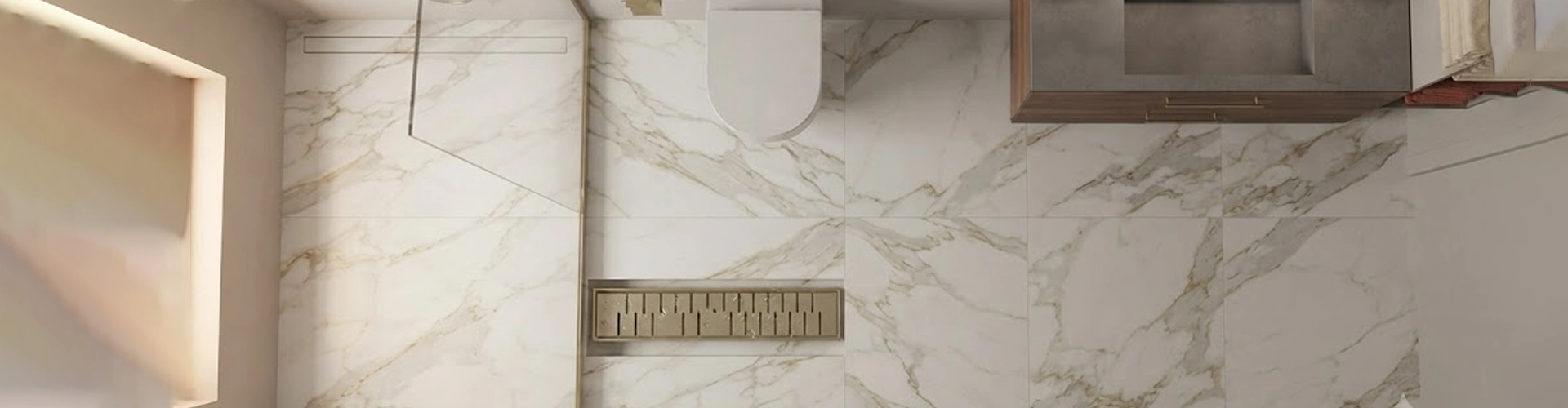
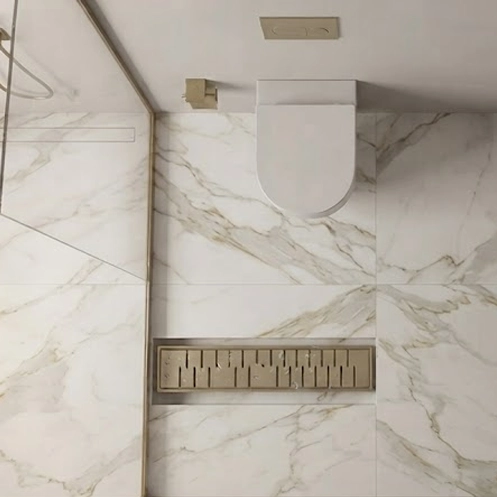
Walk into any newly renovated bathroom lately, and there’s a decent chance you won’t spot a traditional square shower drain at all. Instead, there’s a slim, discreet line running along one edge of the shower floor — a linear drain, quietly doing the same job a center drain used to do, just without interrupting the tile with a bulky grate in the middle of the floor.
If you’re weighing whether a linear shower channel is worth the switch, here’s what it actually does differently, and what to know before installation.
A linear shower channel is a long, narrow drain typically installed along one wall of the shower rather than centered in the floor. Water is channeled toward the drain using a single-direction floor slope, instead of the four-way slope a center drain requires. It’s usually topped with a slotted stainless steel grate that sits flush with the tile, keeping the whole floor looking continuous rather than broken up by a drain in the middle.
This is the benefit most people notice first. Without a center drain forcing a pyramid-style slope from all four corners, tile layouts look flatter and more intentional. Large-format tiles, which look awkward with a steep multi-directional slope, work far better with the single-slope design a linear channel allows.
Center drains require the floor to slope evenly from every direction, which gets more complicated — and more prone to installation error — as the shower footprint grows. A linear channel only needs a slope in one direction, which tends to simplify waterproofing, especially in larger or curbless showers.
Linear drains are a natural match for curbless shower designs, since the single-direction slope makes it easier to create a seamless, step-free transition from the bathroom floor into the shower. This matters both for accessibility and for the increasingly popular open, spa-like bathroom look.
Because the channel runs the width (or length) of the shower rather than sitting as a single point, water has less distance to travel before reaching the drain from any spot in the shower. In practice, this often means less standing water underfoot during a shower.
Most linear channel systems use a removable grate and a shallow trough beneath it, which is generally easier to lift out and clean than reaching into a deep, narrow center drain. Hair and soap residue tend to be easier to spot and clear out with the flatter design.
Linear drains are usually installed against a wall, which affects the overall slope plan for the shower floor. This needs to be decided early in the design process — retrofitting a center-drain shower into a linear one after the fact usually means redoing the entire floor.
Linear channels come with a range of grate patterns — tile-insert grates that hide the drain almost entirely, slotted stainless steel grates, and wave or perforated designs. Matching the grate finish to your other bathroom hardware (fixtures, faucet, shower door frame) keeps the space feeling cohesive rather than mismatched.
Standard lengths run anywhere from around 24 inches up to custom lengths spanning an entire shower wall. Shorter channels work fine for compact showers, but a full-width channel in a larger shower generally handles water more evenly and looks more intentional as a design choice.
Since water only needs to slope in one direction, the installer sets the floor to pitch toward the wall where the channel sits — typically at a standard slope ratio to ensure water clears the floor without pooling.
The drain body is set into the subfloor before waterproofing goes down, positioned along the chosen wall and connected to the plumbing. Getting this positioning right the first time matters, since it’s difficult to adjust later.
A waterproofing membrane is applied over the sloped floor and sealed carefully around the channel edges — this step is critical, since a poorly sealed edge is the most common source of leaks in linear drain installations.
Tile is laid up to the channel edge, and the grate is set flush with the finished tile surface. A flush, level fit here is what gives linear drains their clean, seamless look.
Linear shower channels aren’t just a design trend — they genuinely simplify waterproofing in larger showers, support curbless designs better than a center drain can, and give tile layouts a cleaner finish. The tradeoff is that they require more upfront planning around placement and slope, which makes them a poor fit for a quick retrofit but a strong choice for any shower being built or renovated from the ground up.
Not necessarily harder, but they do require more upfront planning around placement and single-direction slope. For new construction or full renovations, the installation process is generally straightforward for an experienced installer.
Not typically — many linear channels are actually easier to clean thanks to their removable grate and shallow trough design, which makes clearing hair and debris more straightforward than reaching into a narrow center drain.
Generally, no. Because the slope direction differs from a standard center drain, retrofitting usually requires tearing out and re-sloping the shower floor, which is why it’s most practical to plan for a linear drain during a full renovation or new build.
At Jayna Sinks, our expertise in precision stainless steel fabrication carries over naturally to bathroom fixtures like linear shower channels, built with the same attention to finish and durability as our sinks. If you’re planning a bathroom renovation and want guidance on channel length, grate style, or placement, reach out and we’re happy to help you plan it right from the start.

Have you ever arrived home late at night, stripped off your clothes in the dark, and stepped into the kitche..
September 16, 2026
The bathroom is no longer just a functional space; it has evolved into a personal sanctuary that reflects yo..
September 16, 2026
Maintaining proper hand hygiene is essential, especially in today’s high-traffic environments like offices, ..
September 16, 2026


