If you're living in an Indian home, it's likely that your kitchen sink gets a lot of use—from cleaning heavy..
September 15, 2026
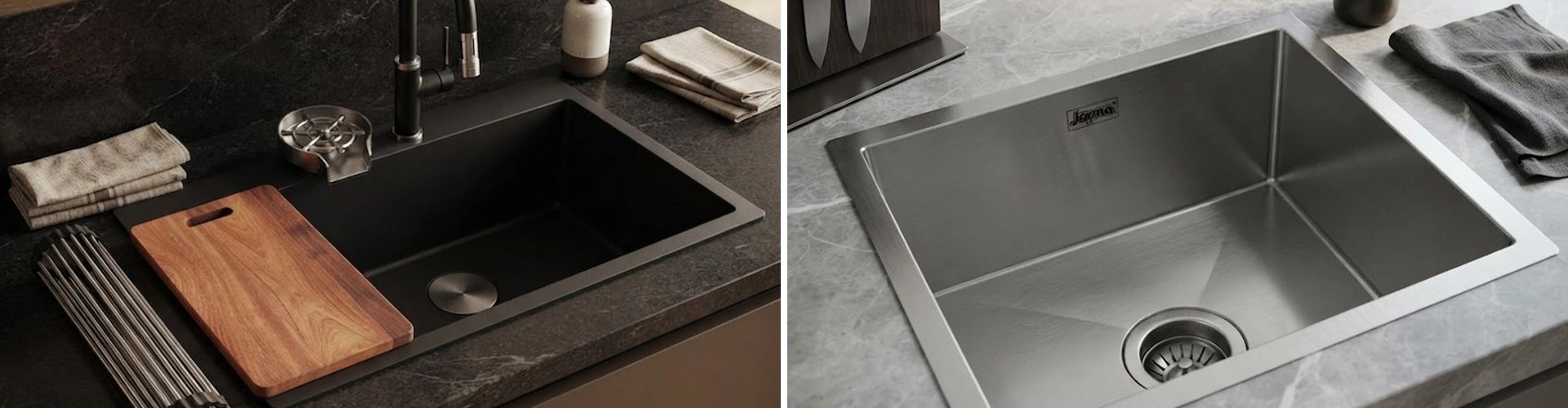
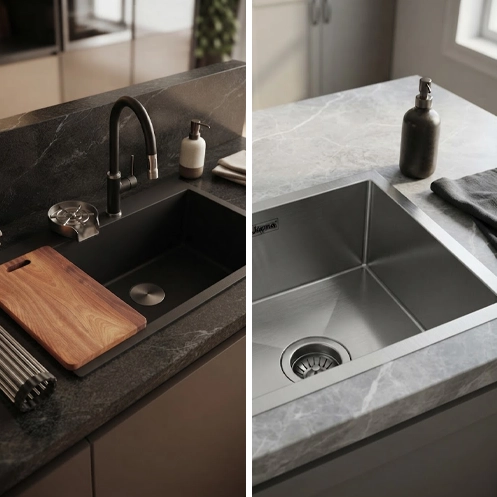
Kitchen renovations bring a lot of small decisions that turn out to be bigger than they seem, and the sink is one of them. Two materials dominate the conversation right now: quartz composite and stainless steel. Both have loyal followings, both look great in the right kitchen, and both come with tradeoffs that don’t always show up until you’ve lived with the sink for a few years.
Here’s an honest, practical look at how they actually compare.
Quartz sinks aren’t solid quartz stone they’re a composite, typically made from crushed quartz mixed with resin and hardeners, then molded under heat and pressure into a dense, non-porous surface. This is the same category of material used in quartz countertops, which is part of why the two pair so seamlessly.
Stainless steel sinks are formed from sheets of steel alloy usually 304 or 316 grade either pressed into shape by machine or hand-fabricated by craftsmen. It’s a material that’s been the kitchen standard for decades, valued for its resistance to rust and its no-nonsense durability.
Choose quartz if you want a softer, quieter sink that matches a stone countertop, you’re not concerned about the extra weight or cost, and you like the deeper, matte color options.
Choose stainless steel if you want proven long-term durability, easier installation, straightforward maintenance, and a sink that fits a wider range of budgets.
There’s no universally “better” material here — it really comes down to the kind of kitchen you’re building and how you use it day to day. A busy family kitchen that sees heavy daily use often leans toward stainless steel for its resilience, while a design-forward kitchen built around a stone countertop might lean quartz for the visual match.
Ask yourself two questions: How much daily wear will this sink take, and does it need to match a specific counter aesthetic? If durability and value top your list, steel usually wins. If look and quietness matter most, quartz often takes the edge.
At Jayna Sinks, we specialize in stainless steel sinks built for the way real kitchens actually work — daily wear, heavy use, and years of reliability without cutting corners on craftsmanship. If you’re weighing your options, our team can walk you through gauge, grade, and finish choices to help you land on a sink that’s genuinely built to last, not just built to look good in a showroom.
Have questions about which stainless steel sink suits your kitchen? Reach out to Jayna Sinks, and we’ll help you find the right fit.

If you're living in an Indian home, it's likely that your kitchen sink gets a lot of use—from cleaning heavy..
September 15, 2026
A quartz kitchen sink is among the most common materials used in today's modern kitchen owing to its eleganc..
September 15, 2026
Cockroaches are a very common problem in Indian kitchens, particularly in regions where there is moisture an..
September 15, 2026


