Your kitchen sink is the one that doesn’t really come to your mind when you are planning the new concept and..
September 16, 2026
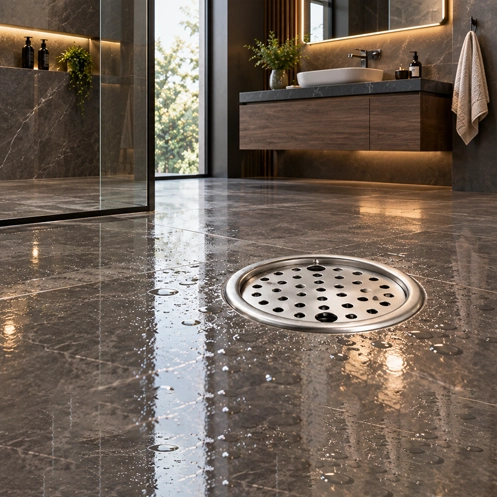
Floor drains rarely get much thought until water starts pooling somewhere it shouldn’t, or the one installed years ago starts smelling faintly of something you’d rather not think about. It’s an easy fixture to overlook during a build or renovation, right up until it becomes the thing standing between a dry floor and a real problem.
If you’re specifying or buying floor drains — for a kitchen, bathroom, utility area, or commercial space — here’s what actually matters, beyond just picking whatever’s cheapest at the hardware store.
Floor drains sit in one of the harshest spots in any building: constant moisture, frequent temperature shifts, and in commercial or industrial settings, exposure to cleaning chemicals and grease. Cheaper materials like plastic or galvanized steel tend to degrade, crack, or corrode under that kind of repeated stress. Stainless steel holds up because it resists rust, doesn’t warp under heat, and doesn’t develop the kind of surface degradation that lets bacteria and odor take hold over time.
Just like sinks, floor drains come in different stainless steel grades. 304 grade handles most residential and light commercial settings well. 316 grade, with its added molybdenum, is worth the upgrade in spaces exposed to harsher chemicals, salt, or heavier chloride content — commercial kitchens, coastal properties, and certain industrial settings in particular.
Floor drains are typically sized by the grate opening and the outlet pipe diameter. A drain that’s too small for the space it’s serving will struggle to keep up during heavy water flow — think commercial kitchens, laundry rooms, or bathrooms that see frequent, high-volume use. Match the drain size to the actual water volume the space generates, not just the room’s square footage.
Grates come in a few common patterns — square hole, round hole, and linear slot designs — and the right choice depends on what’s likely to end up on the floor. Kitchens benefit from grates with smaller, tighter openings that catch food debris before it clogs the pipe, while bathrooms and utility rooms can generally use a more open pattern since less solid debris is involved.
A proper P-trap or deep-seal trap holds a small amount of water that blocks sewer gas from rising back up through the drain. This is one of the most overlooked features in a cheap floor drain — without an effective trap, odor problems tend to show up eventually, especially in spaces that don’t get used daily and allow the trap water to evaporate.
Not every floor drain needs to handle heavy weight, but in garages, commercial kitchens, or loading areas, load rating matters. Manufacturers typically rate drains for light residential use, medium commercial use, or heavy-duty industrial and vehicle traffic — buying below the space’s actual load needs is a common and costly mistake.
A floor drain only works as well as the slope leading into it. Even the best drain will leave standing water behind if the surrounding floor isn’t properly graded toward it. This is worth confirming with your contractor before installation, not something to assume gets handled automatically.
Floor drains need to sit flush with the finished floor level, which means confirming flange height and type against your specific flooring material — tile, concrete, or vinyl each have slightly different requirements for a clean, watertight fit.
Choose a standard 304 grade drain with a square or round grate if you’re installing in a residential bathroom, utility room, or light-use area with minimal chemical exposure.
Choose a 316 grade drain if the space deals with harsh cleaning chemicals, coastal air, or heavier chloride exposure — commercial kitchens and certain industrial settings in particular.
Choose a linear slot drain if you want a more discreet, modern look, particularly in bathrooms or open-concept spaces where a traditional square grate would stand out.
Choose a heavy-duty, load-rated drain if the space sees vehicle traffic or heavy equipment, such as garages or industrial floors.
A good floor drain is one you never think about again after it’s installed — no odor, no pooling, no corrosion. Getting there means matching the grade to your chemical exposure, sizing the drain to your actual water flow, and not skimping on trap design just to save a few dollars upfront. It’s a small fixture with an outsized impact when it’s chosen carelessly.
In spaces used infrequently, pour a small amount of water into the drain every few weeks to keep the trap seal intact and prevent sewer odor from creeping back up.
Basic replacements are sometimes DIY-friendly, but proper slope, trap connection, and flange sealing are easy to get wrong. For anything beyond a straightforward swap, a professional installer is worth the cost to avoid leaks down the line.
At Jayna Sinks, our work in precision stainless steel fabrication extends beyond sinks to the same 304 and 316 grade material used in quality floor drains — built to resist corrosion and hold up under daily use. If you’re specifying drains for a kitchen, bathroom, or commercial space and want guidance on grade or sizing, reach out and we’re happy to help you get it right the first time.
Your kitchen sink is the one that doesn’t really come to your mind when you are planning the new concept and..
September 16, 2026
A quartz kitchen sink is among the most common materials used in today's modern kitchen owing to its eleganc..
September 16, 2026
Have you ever arrived home late at night, stripped off your clothes in the dark, and stepped into the kitche..
September 16, 2026


